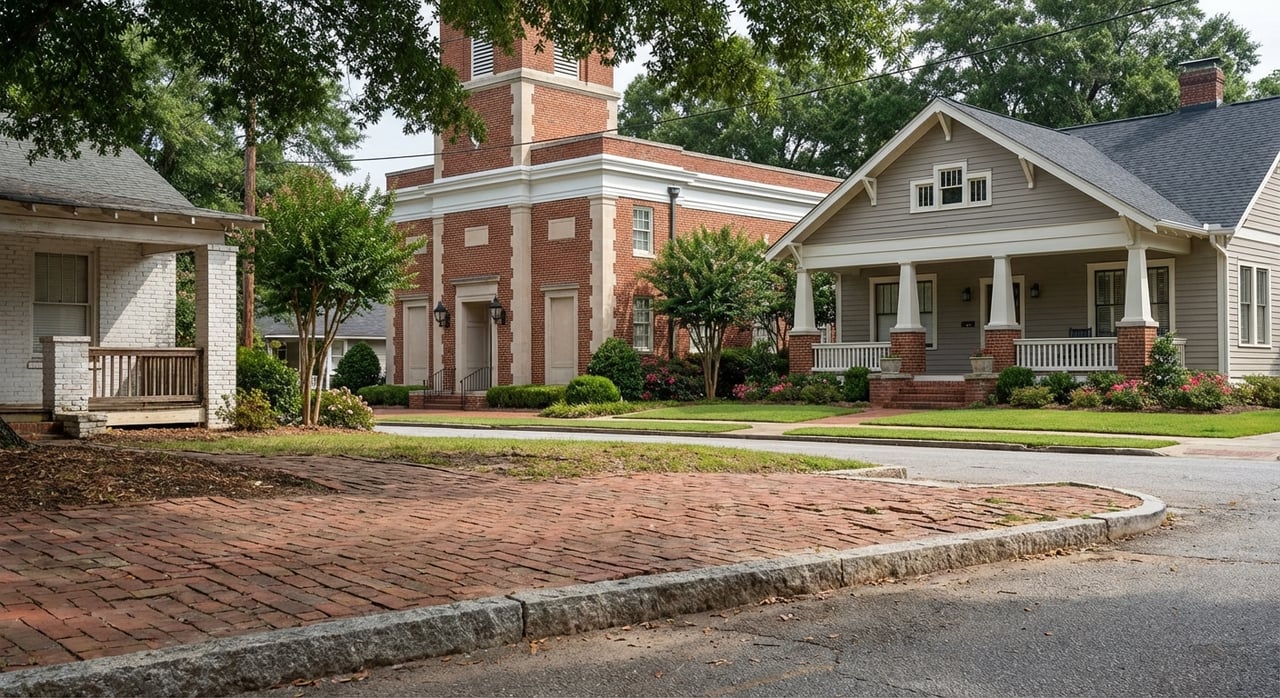
Buying a home from another state can feel like trying to make a major life decision through a screen. If you are moving to Clemson or buying here from afar, you want enough information to act confidently without wasting trips, missing a good home, or getting surprised during closing. The good news is that an out-of-state purchase is absolutely doable when you follow a clear plan. Let’s dive in.
Why planning matters in Clemson
If you are buying remotely, Clemson is not a market where it makes sense to stay casual once you find a home that fits. Recent market snapshots show an active environment, with Redfin reporting a median sale price of $510,000 and median days on market of 35, while another public snapshot cited in the research also points to relatively limited inventory and homes moving in a reasonable timeframe.
The exact numbers can vary by source and timing, but the takeaway is consistent. You will be in a better position if your financing, touring plan, and closing logistics are lined up before your first trip to Clemson.
Start with financing first
Before you book flights or build a favorites list, get preapproved. According to the Consumer Financial Protection Bureau, a preapproval helps you shop for a home and shows sellers you are serious.
That matters even more when you are buying from out of state and working within a limited travel window. Preapproval is not the same thing as a full loan application, but it gives you a strong starting point and helps you narrow your price range before you spend time touring homes.
Use a hybrid home search
A remote home search works best when you treat online tools as your first filter, not your only source of insight. Fannie Mae found that most buyers prefer online channels for searching properties, choosing a lender, and completing mortgage applications, which makes digital search a practical place to begin.
At the same time, that same research found that 90% of buyers still prefer to tour a potential home in person. For most out-of-state buyers, the smartest approach is to narrow your options online first, then save your in-person visit for the homes that still look like true contenders.
Build a shortlist before you travel
Your goal is to make one focused Clemson trip do the work of several casual visits. That means using online listings, photos, property details, and video walkthroughs to narrow the field before you arrive.
A strong shortlist usually includes:
- Homes that fit your budget and financing plan
- Properties that match your must-have features
- A realistic number of homes to tour in one trip
- Backup options in case a home goes under contract before you arrive
This kind of planning gives you a better chance of making decisions while you are in town, instead of going home and starting over.
Treat your Clemson visit like a decision trip
Once you have a shortlist, your trip should be about confirming the right fit. In a market that can move quickly, this is not the time for a broad browsing weekend.
Instead, use your in-person visit to compare your top options, revisit your priorities, and be ready to act if one home stands out. The more focused your trip is, the more useful it becomes.
Schedule inspections strategically
One of the smartest ways to handle an out-of-state purchase is to line up your visit around the inspection period when possible. Fannie Mae advises buyers to attend the inspection tour with the inspector if they can, because it gives you a chance to ask direct questions about the home’s systems and condition.
That is especially helpful when you may not have time for multiple return trips. If your schedule allows it, being present for the inspection can give you a much clearer understanding of the home than photos or a virtual tour ever could.
Understand inspection vs. appraisal
Remote buyers sometimes assume the appraisal covers everything they need to know about the property. It does not. The CFPB explains that an appraisal is generally required by the lender, while the home inspection is your tool for learning about the home’s condition.
This distinction matters. If the inspection reveals issues, you may be able to negotiate repairs with the seller, and if your contract includes an inspection contingency, you may be able to cancel without penalty if the results are not acceptable.
Know how South Carolina closings work
South Carolina has a local process detail that out-of-state buyers should understand early. It is an attorney-supervised closing state.
According to the South Carolina Bar, the preparation of legal instruments, the closing itself, and the recording of documents must be supervised by a licensed South Carolina attorney. In practical terms, your closing attorney plays a central role in coordinating documents, signatures, funding, and recording.
Can you close without returning to South Carolina?
In some cases, yes. South Carolina does allow electronic notarization, but the Secretary of State has made clear that remote notarization is not legal in the state and the signer and notary must be in each other’s physical presence.
That means a fully remote online notarization process is not the usual solution. Depending on your situation, a mail-away closing or another attorney-managed signing option may be possible under the supervision of the closing attorney.
The South Carolina Bar has also said that a lawyer may conduct a closing by mail under certain conditions. If returning for closing is difficult, this is a conversation to have early, not at the last minute.
You can have a say in legal counsel
For financed personal, family, or household purchases, South Carolina law says the creditor must ask for your preference as to legal counsel before closing and comply with that preference. You can review that requirement in the South Carolina Code.
For an out-of-state buyer, that is important because it supports your ability to understand who is handling your closing and how communication will work. When you are coordinating everything from a distance, clarity matters.
Review documents early
If you are financing your purchase, timing around the final paperwork is critical. The CFPB says borrowers must receive the Closing Disclosure at least three business days before closing.
That review period gives you time to confirm your loan terms, closing costs, and cash-to-close numbers. CFPB also advises contacting the lender or closing agent at least a week before closing so you know how the disclosure will be delivered and what other documents you should review in advance.
Budget for recording costs
When you are estimating your total cash needed, remember that recording costs are part of the transaction too. The South Carolina Department of Revenue lists the deed recording fee as $1.85 for each $500 of realty value.
Your closing attorney will help coordinate the final recording steps, but it is still helpful to know that these costs exist as part of the overall closing picture.
Protect yourself from wire fraud
Wire fraud is one of the biggest risks in a remote transaction because so much communication happens electronically. The CFPB warns that scammers may pose as agents, settlement agents, or attorneys and send fake wiring instructions by email.
The safest move is simple: verify wire instructions using a trusted phone number you already confirmed independently. Do not rely on phone numbers, links, or last-minute changes sent in an email.
A simple out-of-state buying plan
If you want to keep the process manageable, focus on this sequence:
- Get preapproved before you start traveling.
- Narrow your search online.
- Plan a focused Clemson visit for your best options.
- Schedule the inspection quickly.
- Stay in close contact with your lender and closing attorney.
- Review the Closing Disclosure early.
- Verify wire instructions separately.
- Use an attorney-managed signing option if returning for closing is not practical.
When you follow this kind of structure, buying from out of state feels less like a leap and more like a well-managed project.
Why local guidance helps
Long-distance home buying involves more moving parts than a local purchase. You are managing timing, travel, financing, inspections, legal steps, and final signatures, often on a compressed schedule.
That is why many out-of-state buyers want a local point of contact who can keep the process organized and communicate clearly at every stage. If you are planning a move or second-home purchase in Clemson, working with a responsive local agent can make the process smoother from search to closing.
If you are planning a move to Clemson from out of state, Svenja Martin offers personalized relocation support and clear local guidance to help you move forward with confidence.
FAQs
Can I buy a Clemson home without seeing it in person?
- Yes, but a stronger approach is usually to narrow the search online first and then tour your final candidates in person, since most recent buyers still prefer in-person tours.
Can I close on a Clemson home without traveling to South Carolina?
- Sometimes yes. A mail-away closing may be possible under attorney supervision, but remote notarization is not legal in South Carolina.
Do I still need an inspection when buying a Clemson home remotely?
- Yes. The CFPB explains that the inspection is your main tool for understanding the home’s condition, even if you already toured the property virtually or in person.
When do I receive the final closing numbers for a Clemson home purchase?
- If you are financing the purchase, you should receive the Closing Disclosure at least three business days before closing.