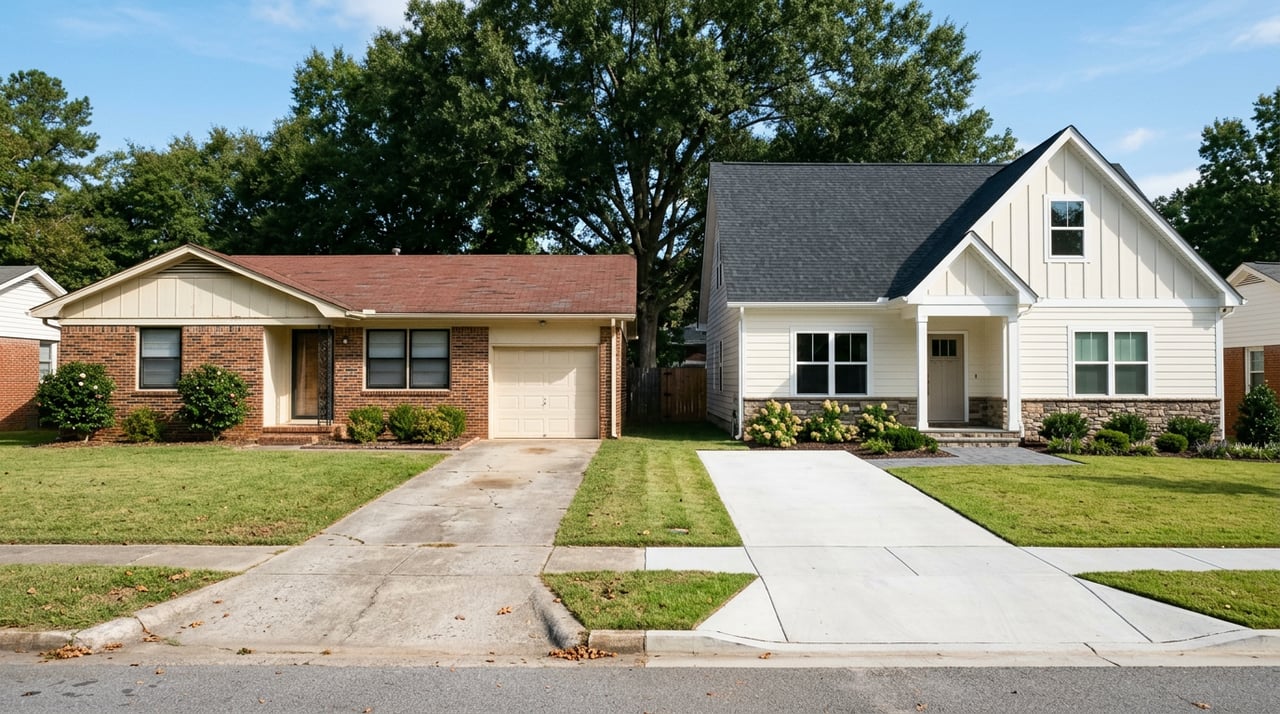
Trying to decide between the fresh feel of a new build and the character of a resale in Central, SC? You have great options in a small market that moves fast, especially near Clemson. The right choice comes down to your timeline, budget, and how much customization you want. In this guide, you’ll compare prices, warranties, timelines, financing, and what to expect in Central so you can move forward with confidence. Let’s dive in.
Central SC market snapshot
Recent pricing in Central shows a wide range. Major housing platforms report different medians for the town, from the upper $200Ks to about $400K, because they track different metrics and the sample size is small. That means two similar homes can be priced very differently based on location, condition, and whether they are new or resale.
What this means for you:
- Expect entry points for both new and resale in the high $200Ks to low $300Ks, with many listings around the $300Ks to $400Ks depending on plan, lot, and proximity to Clemson conveniences.
- Always compare like with like. Use the same metric, such as sold prices in the last 6 months, when you evaluate neighborhoods or communities.
- If you want a precise estimate of taxes or parcel details, use the county tools at the Pickens County Assessor.
New construction: what to expect
Floor plans and locations
You’ll find active subdivisions in and near Central with 3 to 5 bedroom single-family homes, often 1,400 to 2,500+ square feet. Plans commonly feature open kitchens, walk-in closets, and modern finishes. Lots vary by community, from smaller infill to larger suburban parcels. Builders publish plan sheets and standard features, so review what is included versus optional.
Warranties and peace of mind
Most production and many independent builders use a “1-2-10” warranty structure: about 1 year for workmanship, 2 years for systems, and 10 years for major structural issues. Read the contract and confirm coverage, definitions, and whether a third party backs the warranty. Learn the basics from the 2-10 Home Buyers Warranty overview.
Delivery timelines
Your timing options will shape your decision:
- Spec or quick-move-in homes are completed or nearly done, and often close in roughly 30 to 60 days once a certificate of occupancy is issued.
- Build-to-order contracts typically run several months from contract to move-in, often 4 to 12 months based on permitting, weather, and builder backlog.
For a practical overview of how these timelines play out, see this builder guide to the process and timing for new homes from contract to closing at Jagoe Homes.
Pricing and incentives
Builders use a base price plus options and lot premiums. Instead of deep price cuts, you may see closing cost help, temporary interest rate buydowns, or upgrade credits to move inventory. Always ask for a full price sheet, current incentives, and what is standard versus an upgrade.
Resale homes: what to expect
Product mix and tradeoffs
Resale options in Central include older single-family homes, established neighborhoods, and renovated properties. Advantages often include immediate occupancy, mature trees and landscaping, and locations close to established amenities. Tradeoffs can include older mechanicals, lower energy efficiency, or layouts that differ from today’s open-plan preferences.
Inspections and negotiation
Plan to inspect every home you consider. Even new homes can have items at inspection, and older homes may reveal maintenance needs or system-life questions. A solid inspection gives you leverage to request repairs or credits, or to adjust your offer based on findings. For a practical checklist of what inspectors look for, review this home inspection guide.
Financing and appraisal differences
Loan types for new vs resale
- Build-to-order new construction may require a construction-to-permanent loan or a dedicated construction loan. These loans fund in stages, carry interest-only payments during construction, and have stricter underwriting.
- Completed spec homes and most resales typically qualify for conventional purchase mortgages, assuming the property meets lender guidelines.
If you are weighing a construction loan, this consumer explainer on construction-to-permanent financing covers the basics.
How appraisals work
New homes in areas with few recent comparable sales may be appraised using the cost approach or by pulling comps from nearby neighborhoods. This can affect value relative to contract price. If an appraisal comes in low, you need a plan for a gap, a renegotiation, or a lender exception. For a plain-English explanation of appraisal approaches, see this overview of appraisal methods, including cost approach, from LoopNet’s education center.
Inspections and timing tips
- New construction: Schedule stage inspections when allowed, such as pre-drywall and final. Do an 11-month walkthrough before the one-year warranty mark to capture items while builder responsibility remains. A general inspection still matters. Use the inspection checklist as a reference for scope.
- Resale: Order a general inspection plus targeted tests if indicated, such as termite, sewer scope, or radon. Keep the inspection window realistic so you can get results and negotiate confidently.
How to choose: quick decision guide
Use this side-by-side to match your needs.
Choose new construction if you want:
- A builder warranty and modern systems with minimal near-term maintenance.
- The ability to choose finishes and options within the builder’s plan set.
- Energy efficiency and smart-home features common in today’s builds.
- Flexibility on move-in timing or you are comfortable with a 4 to 12 month horizon.
Choose resale if you want:
- A faster close, often 30 to 60 days on move-in-ready homes.
- An established neighborhood or larger, mature lot.
- The option to renovate or customize over time.
- More room to negotiate on price, repairs, or credits based on inspection.
Local factors to compare in Central
- Property taxes: Get parcel-by-parcel estimates with the Pickens County Assessor tools. Millage and improvements vary by property.
- Permits and impact fees: New construction requires permits and county inspections. Ask the builder or check county resources for timelines.
- HOAs: Many new communities include an HOA that maintains common areas and enforces design standards. Review the budget, covenants, and fees before you decide.
- School assignment and commute: Proximity to established schools and Clemson conveniences can influence pricing. Always verify school assignment for a specific address with the district.
Offer strategies that work
- New construction: Instead of pushing for a lower base price, ask for paid upgrades, closing cost assistance, or an interest rate buydown. Get the full warranty document and confirm whether coverage is insurance-backed, like the 1-2-10 model. Keep appraisal and financing protections unless you can cover a possible gap.
- Resale: Lean on recent closed comps to support your price. Pair a strong pre-approval with clean terms and a realistic timeline. Use inspection findings to request repairs or credits.
The bottom line
There is no one-size-fits-all answer in Central. If you value warranties, modern systems, and optionality on finishes, a new build can be worth the premium. If you need a quicker move, prefer an established setting, or want to negotiate on condition, resale is a strong path. In both cases, the right strategy is to compare recent solds, inspect thoroughly, understand your financing, and plan for the appraisal.
If you want a local, step-by-step plan tailored to your budget and timing, reach out to Svenja Martin for a free consultation.
FAQs
What’s the price difference between new and resale in Central?
- Medians reported by major platforms range from the upper $200Ks to about $400K in Central, with new communities often at a premium over comparable resales depending on plan, lot, and location.
How long does it take to close on each type of home?
- Move-in-ready resales and completed spec homes often close in 30 to 60 days, while build-to-order new homes commonly take 4 to 12 months from contract to move-in, depending on permits and builder backlog; see this timeline overview.
What warranties come with a new home?
- Many builders follow a 1-2-10 structure that typically covers one year for workmanship, two for systems, and ten for structural items; review the actual contract and the 2-10 warranty basics.
How do HOAs affect my monthly costs in new communities?
- HOAs add dues for common-area maintenance and design standards; ask for the full disclosure package, budget, and reserve details to compare apples-to-apples with non-HOA options.
Could a new build appraisal come in low?
- Yes, especially where there are few comparable sales and the appraiser leans on the cost approach; have a plan for a gap, negotiation, or lender exception, as explained in this appraisal overview.